
As breast cancer survivors navigate their post-treatment lives, technology-driven approaches are transforming their care and support systems. Innovations such as telehealth, mobile health applications, and data analytics are enhancing accessibility and personalizing the survivor experience. These advancements enable tailored treatment plans and provide crucial resources for managing physical and emotional well-being.
The integration of technology not only streamlines communication between patients and healthcare providers but also fosters a sense of community among survivors. Virtual support groups and online forums are making it easier for individuals to share experiences and coping strategies. This interconnectedness is vital for promoting resilience and fostering a supportive environment.
With ongoing developments in artificial intelligence and machine learning, the future of breast cancer survivor care looks promising. By harnessing these technologies, survivors can benefit from more proactive and informed care management, leading to improved health outcomes and quality of life.
Transformative Technologies in Breast Cancer Survivor Care
Recent advancements in technology are significantly impacting the care of breast cancer survivors. The integration of artificial intelligence, quantitative imaging, and precision medicine is streamlining diagnosis and personalizing treatment, ultimately improving outcomes for patients.
Artificial Intelligence and Machine Learning in Early Detection
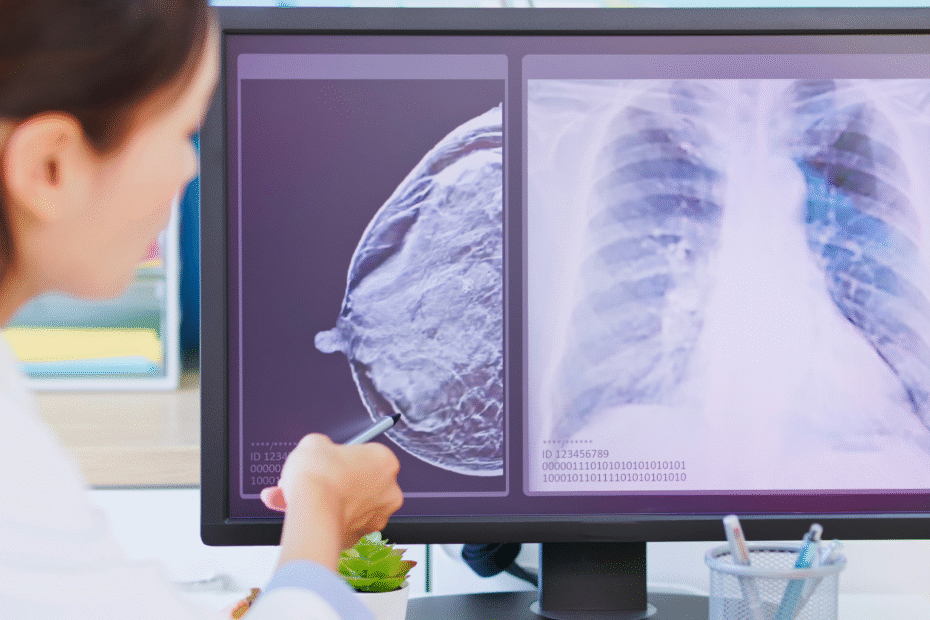
Artificial intelligence (AI) and machine learning (ML) are reshaping early detection methods for breast cancer. AI algorithms analyze mammogram images to identify abnormalities with greater accuracy than traditional methods. Studies indicate that these technologies can reduce false-positive results by up to 30%, minimizing unnecessary biopsies.
Machine learning models continuously improve as they process more data, enabling earlier detection of cancerous changes. Generative AI is also emerging, creating synthetic datasets to train algorithms, thus enhancing diagnostic reliability. As these technologies evolve, they promise to facilitate timely and personalized interventions for survivors.
Quantitative Imaging for Monitoring and Follow-Up
Quantitative imaging techniques are crucial for the ongoing monitoring of breast cancer survivors. These advanced imaging modalities, including MRI and PET scans, provide detailed physiological and metabolic information. This allows for precise tracking of tumor status and treatment response over time.
By employing quantitative imaging, healthcare providers can make more informed decisions regarding follow-up care. Such technologies enable clinicians to assess changes in tumor size and activity, ensuring adjustments to treatment plans are timely and effective, ultimately benefiting patient outcomes.
Precision Medicine and Personalized Treatment Strategies
Precision medicine focuses on tailoring treatments based on individual patient profiles, including genetic markers and tumor characteristics. This approach is increasingly important in breast cancer care, as it allows for more effective therapies that target specific pathways involved in cancer progression.
Personalized treatment strategies often involve selecting targeted therapies, which are less toxic than traditional chemotherapy. Advances in genomic testing facilitate the identification of suitable candidates for these treatments. Consequently, breast cancer survivors are more likely to receive therapies that align with their unique genetic makeup, enhancing both effectiveness and quality of life.
Technology-Driven Approaches to Survivorship Care
Technological advancements play a critical role in enhancing survivorship care for breast cancer survivors. These innovations facilitate long-term health monitoring, promote coordinated care, and improve the quality of life through accessible resources.
Digital Pathology for Long-Term Surveillance
Digital pathology allows for precise and efficient analysis of tissue samples, enhancing surveillance for breast cancer survivors. It enables the storage, retrieval, and sharing of high-resolution images of biopsied tissues.
This process supports pathologists in making accurate diagnoses, monitoring for recurrence, and tailoring treatment plans based on individual patient needs. The integration of artificial intelligence in digital pathology improves diagnostic accuracy and reduces the time required for evaluations.
Moreover, it provides a longitudinal view of the survivor’s health, aiding in early detection of any changes that may indicate issues.
Integrating Electronic Health Records for Coordinated Care
Electronic Health Records (EHRs) play a crucial role in survivorship care by centralizing patient information. This integration allows for seamless communication among healthcare providers, ensuring that all members of the care team have access to the same data.
With EHRs, cancer survivors can receive coordinated care that encompasses physical health and psychosocial support. Data analytics from EHR systems can identify trends in patient outcomes, helping to improve treatment protocols and resource allocation. Furthermore, specialized digital tools and platforms can utilize this EHR data for better patient provider interactions. Solutions like Personify can be integrated with existing records, transforming traditional manual workflows into simplified, patient centric digital trails to engage patients and improve their overall care delivery efficiency.
Additionally, survivors can access their health records easily, promoting engagement in their care and fostering a sense of empowerment.
Telemedicine and Remote Monitoring Tools
Telemedicine offers a convenient way for breast cancer survivors to connect with healthcare providers. This approach minimizes travel and wait times, allowing survivors to receive consultations, follow-up care, and mental health support from home.
Remote monitoring tools also enhance survivorship care by enabling continuous health tracking. Devices that monitor vital signs or symptom severity can transmit data to healthcare providers in real time.
This feedback loop allows for immediate interventions when necessary, improving patient safety. Telemedicine and monitoring can significantly enhance the quality of life, offering flexibility and timely support for survivors.
Advances in Breast Cancer Treatment and Support
Recent developments focus on improving treatment efficacy and enhancing the quality of life for breast cancer survivors. Techniques in radiation oncology, targeted therapies, and supportive care play crucial roles in this evolving field.
Radiation Oncology and Innovative Radiation Therapy Techniques
Radiation oncology has witnessed significant advancements, particularly with techniques like Intensity-Modulated Radiation Therapy (IMRT) and Stereotactic Body Radiation Therapy (SBRT). These methods allow precise delivery of radiation, minimizing damage to surrounding healthy tissues.
Hypofractionation, which involves delivering higher doses of radiation in fewer sessions, has become a viable option. It reduces treatment time while maintaining effectiveness, especially beneficial for patients undergoing mastectomy or breast-conserving surgery. Moreover, the use of imaging technology helps tailor treatments based on individual tumor characteristics and patient anatomy.
This tailored approach enhances the therapeutic index, leading to better outcomes and fewer side effects.
Targeted Therapies and Immunotherapy Integration
Targeted therapies have transformed breast cancer treatment, especially for subtypes like HER2-positive and triple-negative breast cancer. Lapatinib and trastuzumab effectively target HER2 proteins, improving survival rates.
The integration of immunotherapy, such as pembrolizumab for triple-negative cases, marks a pivotal breakthrough. It encourages the immune system to identify and destroy cancer cells, offering hope for patients with metastatic breast cancer.
Emerging combinations of chemotherapy with targeted therapies are being explored to enhance efficacy. This approach not only addresses tumor growth but also aims at reducing the risk of recurrence.
Supportive Care for Lymphedema and Treatment Side Effects
Supportive care is critical for managing side effects related to breast cancer treatments. Lymphedema, a common consequence of lymph node removal or radiation, requires proactive strategies. Manual lymphatic drainage, compression garments, and physical therapy are recommended for symptom management.
Additionally, psychological support is essential for addressing mental health issues. Survivors often experience anxiety or depression due to their diagnosis and treatment journey. Comprehensive care programs incorporating counseling and supportive groups can significantly improve emotional well-being.
Nutritional support also plays a vital role in recovery, ensuring patients meet their dietary needs during and after treatment. These integrated approaches provide holistic care, facilitating a smoother journey for breast cancer survivors.
Improving Outcomes Through Data-Driven Research and Clinical Trials
Data-driven research and clinical trials play a vital role in advancing breast cancer survivor care. These approaches focus on developing innovative therapies and enhancing overall survival rates. Utilizing robust data sets improves treatment efficiency and quality of life for survivors.
Leveraging Clinical Trials for Innovative Therapies
Clinical trials are essential for testing new treatments and therapies. They gather diverse patient data, helping to identify the most effective interventions. Participants often gain access to cutting-edge therapies that are not yet widely available.
Trials may focus on various aspects of treatment, such as:
- New drug efficacy
- Combination therapies
- Personalized medicine strategies
By analyzing trial data, researchers can refine existing treatments and introduce novel options tailored to individual needs. This continuous innovation leads to more effective management of breast cancer.
Enhancing Survival Rates and Quality of Life Through Research
Research initiatives contribute significantly to improved survival rates among breast cancer survivors. Data-driven insights allow for a better understanding of cancer biology, leading to advancements in targeted therapies.
Key areas of focus include:
- Identifying genetic markers associated with better outcomes
- Monitoring long-term effects of treatments
- Developing supportive measures for emotional well-being
Survivors benefit from more personalized and adaptive care, ultimately improving their quality of life. Continued research ensures that care evolves alongside new findings, fostering a proactive rather than reactive approach to treatment.