
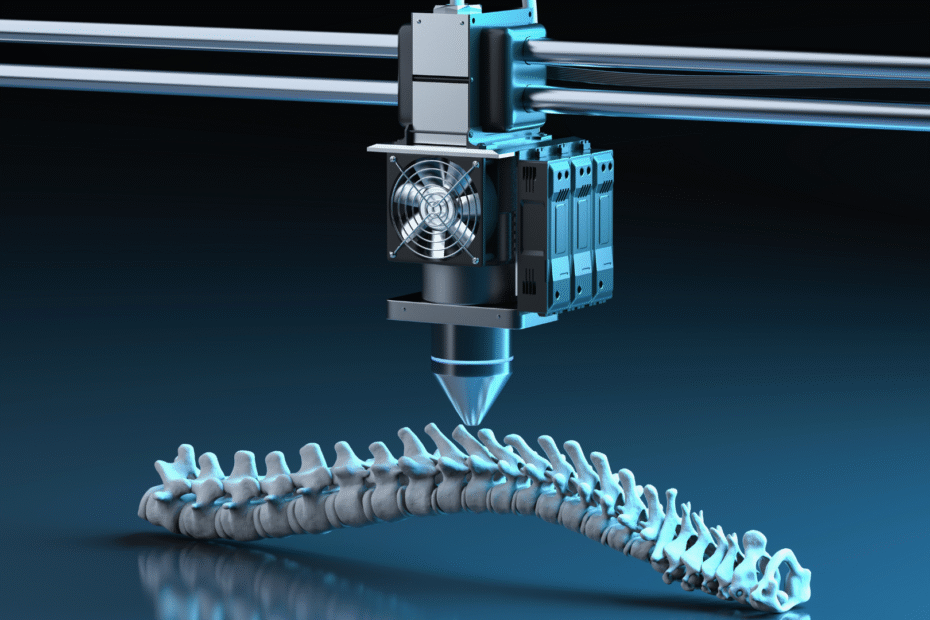
3D printing is rapidly transforming the manufacturing landscape in ways previously thought impossible. This technology allows for greater customization, shorter production times, and reduced waste, making it a game-changer for industries ranging from aerospace to healthcare. As companies adopt additive manufacturing techniques, they can design and produce parts that were once deemed too complex or expensive to create.
The rise of 3D printing has spurred innovation, enabling manufacturers to reimagine product development and supply chain dynamics. With the ability to produce components on demand, companies can maintain leaner inventories and respond more swiftly to market demands. This shift not only enhances efficiency but also empowers businesses to explore new design possibilities that leverage the unique capabilities of 3D printing.
As stakeholders in manufacturing navigate this evolving landscape, it becomes crucial to understand the implications of these advancements. The integration of 3D printing technologies signifies a move towards more sustainable production methods and a potential reduction in the reliance on traditional manufacturing processes.
How 3D Printing Is Transforming Manufacturing
3D printing, also known as additive manufacturing, is reshaping key aspects of manufacturing. It enhances the prototyping process, offers significant advantages over traditional manufacturing methods, and transforms supply chains. These changes lead to increased efficiency, customization, and sustainability in the manufacturing sector.
From Prototyping to Production
3D printing streamlines the transition from prototyping to production. Rapid prototyping allows designers to create models quickly and cost-effectively. With 3D printers, iterative testing becomes feasible, minimizing errors before full-scale production.
Once prototypes are validated, companies can leverage the same technology for small-scale production. This continuity reduces the need for expensive tooling and specialized machinery, making it easier to shift from concept to market. Furthermore, 3D printing supports complex geometries, enabling the creation of intricate designs that traditional manufacturing might struggle to achieve.
Advantages Over Traditional Manufacturing
The advantages of 3D printing compared to traditional manufacturing are notable. First, it supports mass customization, allowing businesses to produce personalized products efficiently. Instead of a standard design, companies can tailor items to individual customer specifications without incurring high costs.
Additionally, 3D printing significantly reduces waste. Additive manufacturing uses only the material needed for a part, contrasting sharply with subtractive methods, which often involve discarding excess material. This not only conserves resources but also lowers production costs and enhances sustainability in the manufacturing sector.
Impact on Supply Chains
3D printing disrupts traditional supply chains by enabling on-demand production. With the ability to manufacture parts at the point of use, companies can reduce inventory costs and lead times. This capability allows for flexible responses to market demand without the burden of excess stock.
Moreover, local production diminishes reliance on global supply chains, increasing resilience against disruptions. In situations where shipping delays may occur, having 3D printers at various sites ensures continuity. This shift leads to a more agile and responsive manufacturing landscape, benefiting businesses and consumers alike.
Key 3D Printing Technologies and Materials in Manufacturing
This section explores prominent 3D printing technologies and the materials used in manufacturing. Each method has unique applications, strengths, and limitations that influence production processes in various industries.
Fused Deposition Modeling (FDM) and Stereolithography (SLA)
Fused Deposition Modeling (FDM) is one of the most widely used 3D printing techniques. It utilizes thermoplastic filaments, such as PLA and ABS, which are heated and extruded layer by layer. FDM is popular due to its cost-effectiveness and ease of use, making it suitable for prototyping.
Stereolithography (SLA) employs a laser to cure liquid resin into solid structures. This technique offers high precision and a smooth finish, making it ideal for intricate designs. SLA materials include various resins, including biocompatible options for medical applications. The choice between FDM and SLA often depends on the required material properties and final part specifications.
Selective Laser Sintering (SLS) and Metal 3D Printing
Selective Laser Sintering (SLS) is a powder-based 3D printing method that uses a laser to fuse plastic, metal, or ceramic powders. It allows for complex geometries and strong support structures, reducing the need for post-processing. SLS parts are known for their durability and can be made from nylon or other advanced materials.
Metal 3D printing techniques, like Direct Metal Laser Sintering (DMLS), enable the production of metal components with high thermal and mechanical properties. Metals such as titanium, aluminum, and stainless steel can be utilized, often resulting in lighter and stronger parts. These methods are increasingly used in the aerospace and automotive industries for critical applications.
Advanced and Emerging Techniques
Advanced techniques in 3D printing include Binder Jetting and Digital Light Processing (DLP). Binder Jetting involves depositing a binding agent onto powder materials to create a part layer by layer, which can include metals and ceramics. This technique is noted for its speed and scalability for larger production runs.
Emerging technologies like bioprinting offer new possibilities in manufacturing. This method combines living cells with compatible materials to create tissue structures for medical applications. As biocompatible materials evolve, the potential for functional tissue and organ printing grows, promising significant advancements in healthcare and regenerative medicine.
Industry Applications and Innovations
3D printing is making significant strides in various industries, facilitating the production of customized and innovative solutions. Its applications span automotive, healthcare, consumer goods, and sustainable manufacturing, reshaping traditional processes and reducing time, cost, and waste.
Automotive and Aerospace
In the automotive and aerospace industries, 3D printing enables the rapid prototyping of parts, such as engine components and interior fittings. Custom parts can be produced on demand, reducing inventory costs and lead times.
For instance, companies like Boeing utilize 3D printing to create intricate components that are lightweight yet strong, improving fuel efficiency.
Additionally, replacement parts can be manufactured quickly, enhancing maintenance processes. This technology allows for innovative designs that were not feasible with traditional manufacturing methods.
Healthcare and Medical Devices
The healthcare sector benefits from 3D printing through the creation of custom prosthetics, implants, and surgical guides. Personalized medical devices, such as tailored dental crowns and hearing aids, improve functionality and patient comfort.
Innovations also include bioprinting, which uses living cells to create tissues and organs, offering potential solutions for transplant shortages.
Companies like Organovo are pioneering this technology, demonstrating significant advancements in creating viable biological structures. Customization in healthcare enhances treatment outcomes and overall patient satisfaction.
Consumer Goods and Personalization
3D printing is revolutionizing consumer goods by enabling mass customization of products like eyewear, jewelry, and household items. Customers can design their own products, resulting in heightened personal connection and satisfaction.
Retailers, such as Nike, use 3D printing to create personalized footwear that perfectly fits individual customers.
This approach not only meets unique consumer demands but also streamlines production processes. Furthermore, businesses benefit from reduced excess inventory, leading to effective resource management.
Sustainable Manufacturing
Sustainability is a critical focus in modern manufacturing, and 3D printing contributes significantly to waste reduction and environmental impact. The technology allows for the use of recycled materials in production, decreasing the carbon footprint associated with manufacturing.
By minimizing material waste during the creation process, companies can operate more efficiently and responsibly.
Moreover, additive manufacturing facilitates localized production, which reduces emissions linked to transportation. As businesses increasingly consider environmental implications, 3D printing offers a path towards sustainable practices.
Challenges, Opportunities, and the Future Landscape
The transition to 3D printing in manufacturing presents both challenges and opportunities that will shape its future. Key aspects include production scale, technological limitations, and the integration of digital processes.
Production Scale and Cost Considerations
Achieving large production scales with 3D printing remains a challenge. Current technologies excel in small-batch and low-volume production, which allows for customization but limits cost-effectiveness when scaling up. Industries need to evaluate the balance between cost savings and production speed.
Important factors include:
- Material waste reduction is achieved as 3D printing typically uses only the necessary material.
- Innovation in production processes can lower costs and improve efficiency.
- Investments in research and development to advance manufacturing technology.
These elements can enhance productivity and create opportunities for distributed manufacturing, enabling localized production that reduces logistics costs.
Technological Limitations and Quality Control
Technological limitations hinder the widespread adoption of 3D printing. Ensuring consistent quality across different materials and production runs is critical. Manufacturers must address:
- Variability in material properties can affect finished product performance.
- Challenges in achieving the necessary certifications for safety and compliance in industries such as aerospace and healthcare.
Quality control measures need to be enhanced through the use of artificial intelligence to monitor production processes. Incorporating advanced sensors and data analytics could decrease defects and optimize outcomes, improving overall product quality.
Digital Integration and Future Trends
The future landscape of manufacturing is leaning towards digital integration. The combination of 3D printing with technologies like artificial intelligence and the Internet of Things (IoT) will create smarter workflows.
Key trends include:
- The evolution of 4D printing, which adds the dimension of time, allows products to change shape or function in response to environmental conditions.
- Increased focus on intellectual property as innovations in 3D printing lead to new products and business models.
Manufacturers embracing these trends will likely see enhanced competitiveness, reduced production costs, and more efficient supply chains. The synergy of advanced technologies can transform traditional manufacturing practices, aligning them with future demands.